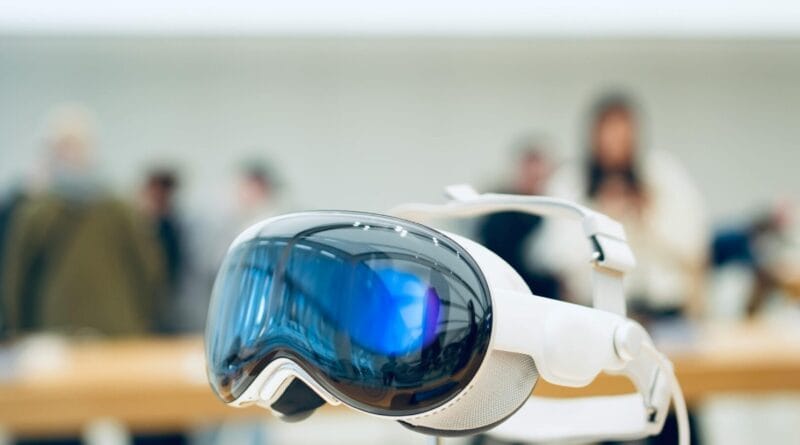
The End of the iPhone Era? Apple’s ‘Vision Air’ Glasses Leak Ahead of Spring Event
The tech world is reeling today following what appears to be one of the most significant product information leaks in Apple’s recent history. Just weeks ahead of the company’s highly anticipated spring event, detailed renders and specifications of a new augmented reality device – tentatively dubbed “Vision Air” – have flooded prominent tech forums and reliable leaker channels.
If these leaks are authentic, they suggest a paradigm shift far greater than the iterative iPhone updates of the last decade. They signal Apple’s aggressive push to make the handheld smartphone obsolete within the next five years.
The Leak: Moving Beyond the bulky “Pro”
For years, the industry has watched Apple’s tentative steps into mixed reality with the powerful, yet cumbersome, Vision Pro headsets. While technologically impressive, those devices were tethered to home or office use by their size and battery constraints.
Today’s leak points to something radically different. The “Vision Air” renders show a device that looks startlingly like standard, albeit slightly thick-framed, luxury eyewear.
According to prominent supply chain analyst Ming-Chi Kuo, who has a track record of accuracy regarding Apple’s roadmap, the breakthrough comes from a new micro-OLED display technology developed in partnership with Sony, combined with a decentralized processing unit that the user might wear on their wrist or clip to a belt, similar to the early iPod shuffle concept.
“The goal isn’t immersion anymore; it’s integration,” Kuo noted in a research note viewed by Global News Online. “Apple wants information to exist in the real world layer, not block it out. This is the device that gets people to finally put their iPhones back in their pockets for good.”
Features: The “Heads-Up” Life
The leaked documentation suggests the Vision Air will focus on “passive information overlay.” Instead of the deep, immersive apps of the Vision Pro, the Air is designed for navigation, immediate communication, and contextual data.
Imagine walking down a city street. Instead of looking down at maps on your phone screen, navigation arrows are lightly projected onto the sidewalk in front of you. When a message arrives, it appears floating subtly in your peripheral vision, dismissible with a minute glance gesture tracked by internal eye-sensors.
This shift toward “glanceable” interfaces is a direct challenge to the current dominance of the smartphone screen. It also aligns with broader industry trends we are seeing in other sectors. For instance, recent developments in space exploration technology rely heavily on similar heads-up display tech for astronauts, proving the reliability of these systems in critical environments (read more in our science and space section).
The Business Impact: A Trillion-Dollar Gamble
The implications for Apple’s bottom line, and the wider tech market, are staggering. The iPhone is the most successful consumer product in history. Cannibalizing its own primary revenue stream is a risk only a company with Apple’s war chest can take.
However, the market demand is there. Tech fatigue is real; consumers are increasingly looking for ways to disconnect from the “black mirror” in their hands without losing connectivity.
Competitors are already scrambling. Meta is rumored to be accelerating the timeline for its next-gen Ray-Ban collaboration, and Google is dusting off its failed “Glass” project for a modern rebirth. According to a recent report by Bloomberg technology, venture capital funding for AR hardware startups has tripled in the first month of 2026 alone, anticipating an “Apple-led gold rush.”
Privacy Concerns and the Road Ahead
Of course, the shift to always-on facial cameras raises immense privacy concerns that Apple will need to address front-and-center at their spring event. The leak mentions a hardware-level LED indicator that makes it obvious when the device is recording, but will that be enough for the general public?
Furthermore, the pricing remains a mystery. While it won’t cost the $3,500 of the original Vision Pro, advanced miniaturization is expensive. Analysts predict a price point between $1,500 and $2,000—positioning it as a premium laptop replacement rather than a phone accessory.
As we approach the official announcement, the excitement is palpable. The tech industry thrives on disruption, and we haven’t seen genuine disruption since 2007. Whether the Vision Air is the final nail in the smartphone’s coffin remains to be seen, but one thing is clear from today’s leak: Apple is done iterating. They are ready to revolutionize.
Stay tuned to Global News Online for live coverage of Apple’s spring event as this story develops. For more insights into how major corporations are pivoting their strategies in 2026, check out our latest business news analysis.
